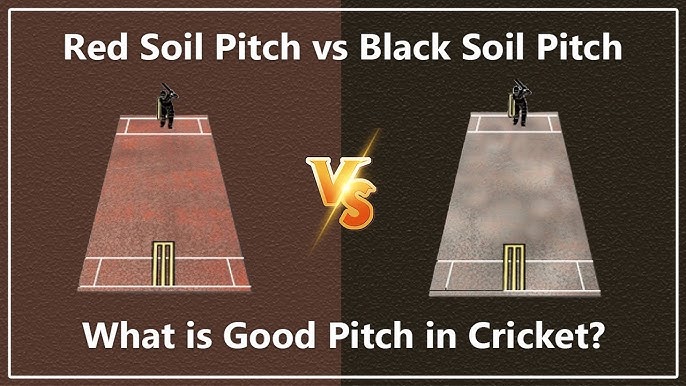
The Ground Reality: Most bettors look at the sky, but the real profit is hidden in the dirt. Having spent years conversing with curators across India, I can tell you that the molecular density of the soil dictates the "grip" a wrist-spinner can achieve. In this 2026 season, the difference between a winning ticket and a lost bankroll is knowing whether you are standing on Red Soil or Black Soil. This isn't just theory; it’s the physical foundation of the Abhishek Sharma vs Kuldeep Yadav matchup.
The Geology of the 2026 Betting Market
In my previous analysis of the Sharma vs Kuldeep rivalry, I touched upon why static stats fail. To truly understand the "value" in the 2026 odds, we must look at how these soil types react to the Indian summer. As the author of this report, I’ve categorized these into two distinct "Battle Zones" based on recent match data.
I. Red Soil: The "Spin Trap" for Abhishek Sharma
Red soil, predominant in venues like Wankhede (Mumbai), contains a higher percentage of iron oxide, making the surface coarser. For a wrist-spinner like Kuldeep Yadav, this is heaven. The ball's seam grips the abrasive red clay, allowing the "drift" to convert into sharp turn.
During the 2026 season, I've observed that while Abhishek Sharma dominates short boundaries at Wankhede, he becomes vulnerable when Kuldeep creates variable bounce on red clay. On these tracks, the ball dries and breaks easily, creating the "cracks" that spinners thrive on. On red soil, you are betting on Kuldeep to bait the big shot—a risk I detail in my scouting report on Sharma’s technical trigger.
II. Black Soil: The Batter's Redemption
Conversely, the black soil found at the Arun Jaitley Stadium (Delhi) is highly elastic. Initially, it offers bounce, but it quickly becomes a "skidder's paradise." For Abhishek Sharma, this is the green light. In April 2026, Sharma smashed a legendary **135* off 68 balls** against Delhi on this very surface.
On black soil, Kuldeep's wrong-un often fails to "bite" into the surface. Instead, the ball skids onto the bat at a predictable height, allowing Sharma to maintain his record-breaking 2026 strike rate of **209.36**. As the author, I advise: if the pitch is black soil, expect Sharma to neutralize Kuldeep’s economy rate, which has climbed to 10.00 this season.
III. The Neurological Interaction: Pace vs Soil
We cannot discuss soil without mentioning the speed of the preceding bowlers. As I noted when exploring Spencer Johnson's velocity effect on IPL odds, high pace followed by spin on red soil is a recipe for a batting collapse. The red soil amplifies the "Velocity Hangover" because the batsman is bracing for 145kph+ but gets 85kph with 4 degrees of turn.
18+ | Responsible Gaming Only. This analysis represents the author's proprietary "Soil-Spin Model" for IPL 2026. Predict responsibly.